

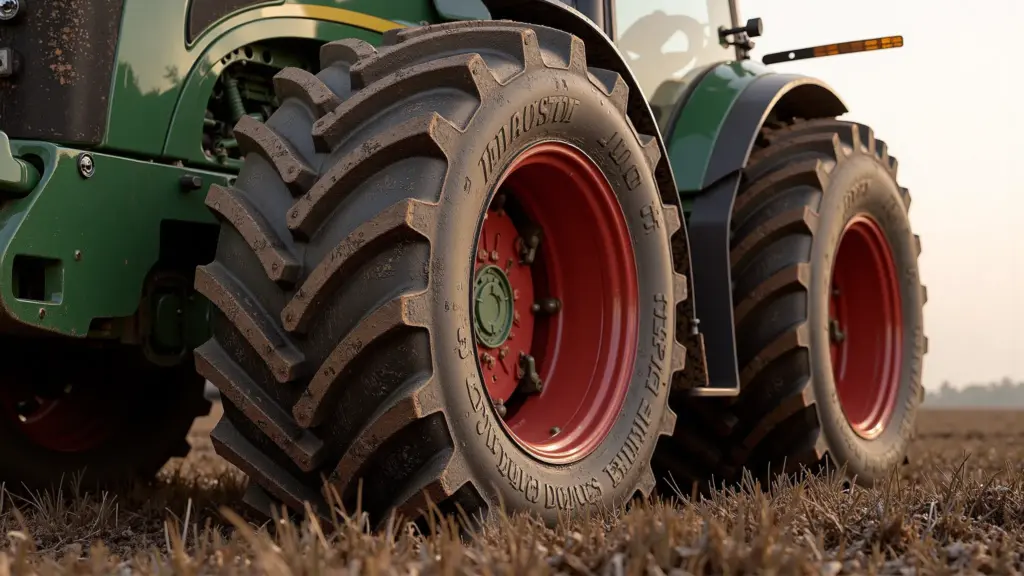
The Harsh Operating Environment and Material Challenges of Agricultural Drive Shafts
Agricultural machinery operates in some of the most demanding conditions imaginable. Drive shafts must withstand:
- Extreme loading: Sudden torque spikes when implements hit obstacles
- Impact forces: From rocks, tree roots, and uneven terrain
- Torsional vibrations: Created by unbalanced implements and rough terrain
- Corrosive environments: Mud, manure, fertilizers, and moisture
These conditions lead to specific failure patterns according to field studies [S1]:
- 45% fatigue fractures at stress concentration points
- 30% torsional failure from overload
- 20% wear-induced failure at joints
- 5% corrosion-related failures
When selecting drive shaft materials, engineers must balance four critical properties:
| Property | Why It Matters | Minimum Requirement |
|---|---|---|
| Fatigue strength | Determines lifespan under cyclic loading | >500 MPa (for 10^7 cycles) |
| Toughness | Prevents catastrophic fracture under impact | >40 J (Charpy V-notch) |
| Wear resistance | Reduces surface degradation | Hardness >45 HRC |
| Corrosion resistance | Maintains integrity in wet conditions | Moderate to high |
Material Characteristics Comparison of Common Drive Shaft Steels
Carbon Steel Series: 40Cr and 45 Steel
The most economical options, with typical applications:
45 Steel (ASTM 1045):
- Tensile strength: 610-800 MPa
- Good machinability but limited hardenability
- Best for: Low-power equipment shafts (<50 hp) with smooth operation
- Limitations: Poor impact toughness below 0°C
40Cr (AISI 5140):
- Chromium addition improves hardenability
- Tensile strength: 780-980 MPa after quenching
- Cost/performance sweet spot for mid-range equipment
- Fatigue limit ≈ 300 MPa at 10^7 cycles [S3]
Alloy Steel Series: 42CrMo vs 20CrMnTi
For high-demand applications:
42CrMo (AISI 4140):
- Molybdenum adds tempering resistance
- Tensile strength: 850-1100 MPa after heat treatment
- Superior fatigue performance: 350-450 MPa at 10^7 cycles
- Maintains toughness down to -20°C
20CrMnTi:
- Titanium refines grain structure
- Excellent impact toughness (>60 J)
- Good for shock-loading applications
- Surface hardness up to 58 HRC after carburizing
Emerging Materials: Boron Steel Development
Boron-added steels (e.g., 40B) show promise:
- 0.001-0.003% B improves hardenability dramatically
- Achieves 42CrMo performance at lower alloy cost
- Current limitation: Toughness variability in production batches [S4]
How Heat Treatment Impacts Fatigue Life
Quenching and Tempering Process Optimization
Proper heat treatment can improve fatigue life by 300-500%:
Quenching considerations:
- Oil quenching reduces distortion risk vs water quenching
- Austenitizing temperature critical for grain size control
- Agitation improves cooling uniformity
Tempering balance: | Tempering Temperature | Hardness (HRC) | Toughness (J) | Fatigue Strength | |————————|—————-|—————|——————| | 200°C | 52-55 | 25-30 | Highest | | 400°C | 45-48 | 50-55 | Balanced | | 600°C | 30-35 | 80+ | Lowest |
Microstructural Control in Tempering
The key to fatigue performance lies in microstructure:
- Martensite transformation during quenching creates internal stresses
- Tempering carbides form during holding:
- ε-carbides (200-300°C) provide dispersion strengthening
- Cementite (300-450°C) balances strength/toughness
- Over-tempering (>500°C) causes carbide coarsening
Surface Enhancement Technologies
Advanced treatments push performance further:
- Induction hardening: Creates compressive surface stresses (-400 to -800 MPa)
- Shot peening: 15-25% fatigue life improvement
- Nitriding: Surface hardness up to 72 HRC with minimal distortion
Optimal Material Selection Based on Fatigue Life
Light-Duty Applications (Small Tractors, Implements)
Cost-effective solution:
- Material: 40Cr steel
- Heat treatment: Quench + temper at 400°C
- Resulting properties:
- Tensile: 900-950 MPa
- Fatigue limit: 320 MPa
- Cost: $$$
Heavy-Duty Applications (Large Tractors, Harvesters)
High-performance solution:
- Material: 42CrMo
- Heat treatment:
- Forged → Normalize → Quench (oil) → Temper 450°C
- Enhanced surface treatment:
- Induction hardening depth: 4-6 mm
- Compressive stress: -600 MPa
- Resulting properties:
- Tensile: 1000-1100 MPa
- Fatigue limit: 420 MPa
- Cost: $$$$
Future Material Development Trends
Emerging solutions address current limitations:
- Boron-microalloyed steels (reducing Cr/Mo content)
- Nanostructured bainitic steels (exceptional toughness)
- Hybrid treatments:
- Laser hardening + shot peening
- Cryogenic treatment post-tempering
Conclusion and Recommendations
Selecting drive shaft materials requires understanding:
- Operational stresses (torsion > bending in agriculture)
- Failure mechanisms (fatigue dominates)
- Material-process interactions (heat treatment is crucial)
Implement this decision process:
Operational Assessment → Material Screening → Heat Treatment Design → Surface Enhancement → Prototype Testing
Maintenance is critical: Regular inspection for:
- Surface pitting (initiates fatigue cracks)
- Bearing wear (creates misalignment)
- Corrosion (especially at splines)
Even the best material will fail without proper maintenance. Implement vibration monitoring on critical equipment to detect developing issues before catastrophic failure occurs.
Your Experience Matters
What’s the most challenging drive shaft failure you’ve encountered in agricultural equipment? Share your field experiences below.